If your car’s A/C is blowing warm air in the Texas heat, you are not alone. Here in Haslet, summer temperatures regularly push past 100 degrees, and a failing A/C system is more than uncomfortable. It is a safety issue. At Brittni’s Automotive Repair, we handle car A/C diagnostics and repairs the right way: with precision-weighted refrigerant charging, verified vacuum integrity, and the right equipment for your specific vehicle.
Knowing the difference between R-134a and R-1234yf refrigerants and understanding what a proper car A/C service actually involves will help you ask the right questions and avoid paying for a “recharge” that won’t hold.
Why Your Car A/C Blows Warm in the Texas Heat
Texas summers are brutal on A/C systems. Heat, dust, and year-round usage push every component harder than in most other climates.
When your A/C stops cooling, it usually comes down to one of these causes:
- Low refrigerant due to a leak somewhere in the system
- A failed compressor that can no longer pressurize the refrigerant circuit
- A clogged expansion valve or orifice tube restricting refrigerant flow
- A condenser blockage from road debris common on Highway 114 and surrounding roads
- Moisture contamination inside the system after a seal fails
Most drivers assume they just need a “freon top-off.” But refrigerant does not evaporate on its own. If the level is low, there is a leak. Adding refrigerant without finding and fixing the source is a short-term fix that buys you weeks, not a summer.
R-134a vs. R-1234yf: What Is the Difference?
R-134a
R-134a has been the standard automotive refrigerant since the mid-1990s. It replaced R-12 (Freon) as the industry standard and is still used in millions of vehicles on the road today, including many of the Hondas, Chevys, Fords, and Dodges we see regularly in the Haslet area.
R-134a operates at well-understood pressures and is serviceable with widely available equipment. It works well and is still perfectly suited for the vehicles designed to use it.
R-1234yf
R-1234yf is the newer refrigerant now required in most vehicles built after 2017. It was developed in response to EPA regulations targeting greenhouse gas emissions. Compared to R-134a, it has a significantly lower global warming potential.
There are a few important things to know:
- R-1234yf is mildly flammable, which changes how it must be handled and recovered
- It requires dedicated equipment that cannot be swapped with R-134a tools
- It is more expensive per pound than R-134a
- It operates at similar pressures but requires a different oil and O-ring compatibility check
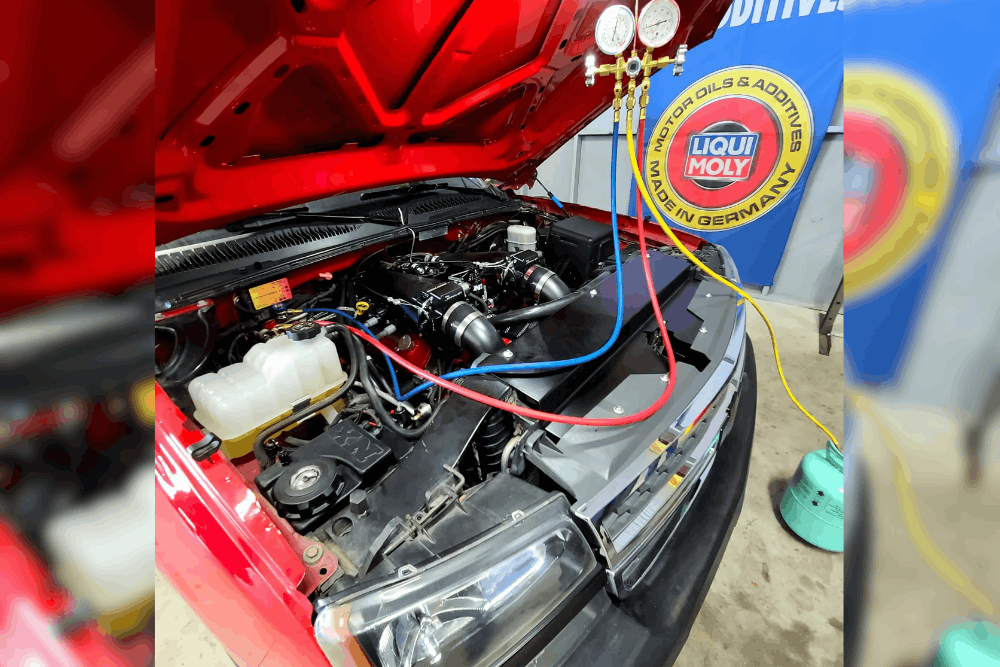
We work with both refrigerant types. Our Robin Air HVAC machine is set up to handle R-134a services, and we use refrigerant-specific equipment for R-1234yf vehicles to prevent cross-contamination. Cross-contaminating these refrigerants causes compressor damage and system failure. That is why equipment separation matters.
What "Precision Weights and Vacuum Integrity" Actually Means
This is the part most shops skip or rush.
Refrigerant Charging by Weight in Haslet
Every vehicle has a manufacturer-specified refrigerant charge listed in ounces. That number is not a guideline. It is a precise target. Overcharging a system by even a few ounces raises head pressure, strains the compressor, and reduces cooling efficiency. Undercharging leaves you with warm air and accelerated compressor wear.
We charge refrigerant by weight using calibrated equipment, not by pressure gauges alone. Pressure readings can be misleading depending on ambient temperature and engine load. Weight-based charging is the only way to hit the factory specification accurately every time.
Vacuum and Leak Testing in the Haslet Summer Heat
Before any refrigerant goes into a system, we pull it into a deep vacuum. This step serves two purposes: it removes moisture and it verifies the system holds a seal.
If the system cannot hold vacuum, it has a leak. Period. Skipping this step and simply adding refrigerant means you’re filling a leaking system, and you’ll be back in the same situation in a few weeks.
In the Haslet heat, moisture in your car’s A/C system is especially damaging. Water and refrigerant mix to form acids that corrode metal components from the inside out. Proper vacuum evacuation protects the system and extends the life of the compressor, which is the most expensive component to replace.
Signs You Need Car A/C Service Before the Heat Hits
You don’t have to wait until your A/C stops working completely. Catching a problem early is almost always cheaper than waiting for a compressor failure.
Watch for these warning signs:
- A/C is blowing cool but not cold, even on max settings
- You hear a clicking or grinding noise when the A/C turns on
- There is a musty smell coming from the vents
- The system takes longer than it used to reach your set temperature
- You notice moisture or oil staining near A/C lines or fittings
Any one of these symptoms is worth getting checked before summer peaks. Haslet drivers deal with six-plus months of heavy A/C usage every year. That’s a long time to run a compromised system.
Ready to get your A/C right before the heat takes over? Visit us at Brittni’s Automotive Repair, 5894 TX-114, Haslet, TX 76052, or call us at 817-350-7408. We offer after-hours pick-up and drop-off so you can schedule around your day, not the other way around.
HVAC Diagnostics: What We Check at Brittni's Automotive Repair
A proper car A/C inspection goes deeper than a quick pressure check. Here is what a full HVAC diagnostic covers when you bring your vehicle to us:
- Refrigerant type identification to confirm R-134a or R-1234yf before any service
- Leak detection using UV dye and electronic detection equipment
- Compressor clutch and engagement test to confirm the compressor is cycling correctly
- Condenser and evaporator inspection for blockage, damage, or contamination
- Pressure testing across both high and low sides under operating conditions
- Blower motor and blend door check to rule out mechanical airflow issues
- Cabin air filter condition which affects airflow volume and cooling efficiency
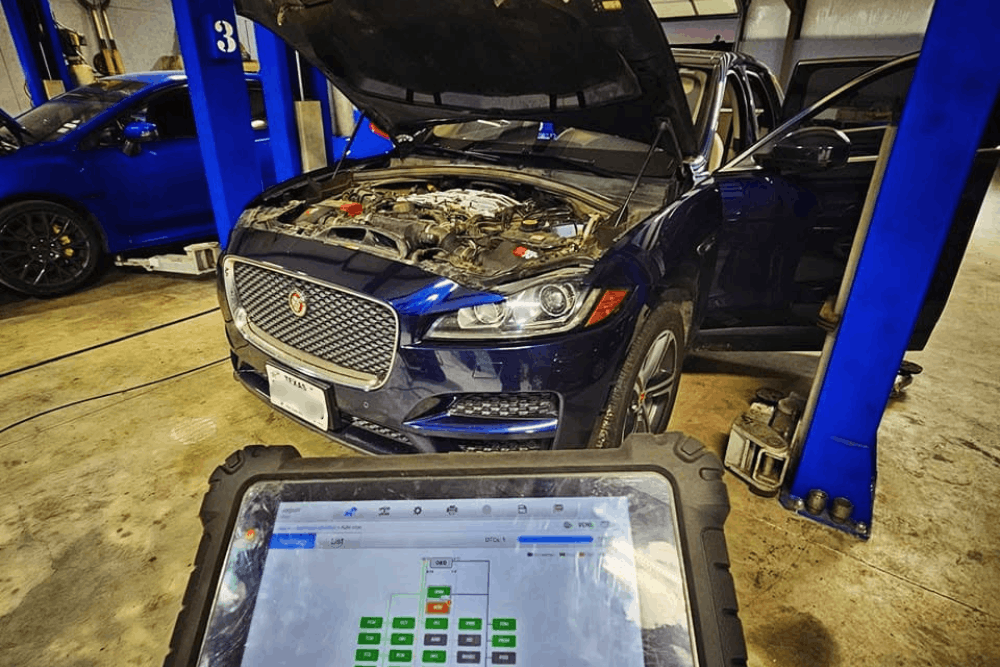
We use our Snap-On Triton and Autel MS919 to pull A/C-related fault codes and live data where applicable, giving us a complete picture of how the system is performing before we recommend any repair. Guesswork is not part of our process.
Why Choose Brittni's Automotive Repair for Car A/C Service in Haslet, TX
Precision diagnostics is not just a phrase we use in marketing. It is how we operate every day. We are a female-owned, technician-led shop that was voted #1 Auto Repair Shop by Fort Worth Weekly Magazine for 2024 and 2025, and every vehicle that comes through our doors gets treated with the same level of care.
- 12-Month/12,000-Mile Warranty: All qualifying repairs covered for a full year or 12,000 miles.
- Generational Expertise: 17 years of hands-on experience backed by Ford Master ASE Certification and a family rooted in automotive repair.
- HVAC and MVAC Certified: Dedicated car A/C certifications covering both Section 609 EPA refrigerant handling and mobile A/C service.
- Robin Air HVAC Machine: Professional-grade refrigerant recovery and recharging equipment for both R-134a and R-1234yf systems.
- Snap-On Triton and Autel MS919: Factory-level diagnostic scanning for accurate, data-driven repair decisions.
- Shuttle Service and After-Hours Drop-Off: Convenient options so car A/C service fits your schedule.
- Online Payment Available: Secure, contactless payment available for regular customers.
- DFW Area Service: Serving Haslet, Rhome, and the greater Fort Worth area with precision workmanship.
FAQs About Auto Air Conditioning Repair in Haslet, TX
Why is my car's A/C blowing warm in the Texas heat?
Warm air in the Texas summer most often indicates low refrigerant due to a leak, a failing compressor, or a blocked condenser. All three conditions worsen under high heat loads. A proper diagnosis is the only way to pinpoint the cause and avoid repeat failures.
What is the difference between R-134a and R-1234yf?
R-134a is the older refrigerant standard used in vehicles built before roughly 2017. R-1234yf is the newer, lower-emission refrigerant required in most vehicles built after that. They are not interchangeable and require separate handling equipment. Using the wrong refrigerant damages compressors and voids warranty coverage.
How much does a car A/C diagnostic cost?
Car A/C diagnostic pricing varies depending on the depth of inspection required and the vehicle. Reach out to a trusted local repair shop for an accurate estimate before your visit.
How do Haslet drivers know if their car A/C needs a recharge or a repair?
If your system is low on refrigerant, there is always a reason. Haslet drivers dealing with weak cooling should not assume a recharge alone will solve the problem. A leak check and vacuum test will confirm whether the system holds after it is charged, saving you from paying for refrigerant twice.
Schedule Your Car A/C Service at Brittni's Automotive Repair in Haslet, TX
As our slogan goes: schedule time for your car or your car will schedule it for you. A failing A/C in Texas does not pick a convenient moment. Getting ahead of it now means cool air when you need it most.
Brittni’s Automotive Repair handles auto air conditioning repair with the precision your vehicle deserves. Backed by a 12-month/12,000-mile warranty, we are your trusted local alternative in Haslet and across the DFW area. Visit us at 5894 TX-114, Haslet, TX 76052, call us at 817-350-7408, or schedule online to book your appointment today.