Modern vehicles are not just machines. They are rolling networks of computers, sensors, and communication lines, all talking to each other at high speed. When that communication breaks down, strange things happen: warning lights with no clear cause, modules that refuse to talk, keys that stop working, and systems that seem to malfunction out of nowhere. At Brittni’s Automotive Repair in Haslet, TX, we help drivers across the DFW area cut through the confusion and get to the real source of the problem.
In this post, we will break down how CAN-bus networking works, including the High and Low CAN systems, LIN Bus, and FlexRay that most drivers never know exist, why module programming matters, what key fob programming has to do with your car’s computer, and why precision diagnostics is the only way to fix what other shops cannot find.
Your Car Is a Computer on Wheels
Think about how your phone works. Apps talk to each other. One background process affects another. Your vehicle operates the same way, except the stakes are much higher.
Modern cars can contain anywhere from 30 to over 100 individual electronic control modules (ECMs). Each one manages a specific system, including the engine, transmission, brakes, A/C, steering, and more. They constantly send and receive data across a shared communication highway known as the CAN-bus.
CAN stands for Controller Area Network. Instead of running hundreds of individual wires between every system, it uses two wires to carry all that data across the vehicle simultaneously.
What Does the CAN-Bus Actually Do?
The CAN-bus acts as the vehicle’s central nervous system, but it is not the only network on board. Most drivers do not realize modern vehicles run multiple communication systems: High CAN and Low CAN, LIN Bus for lower-speed functions, and FlexRay for safety-critical systems like advanced braking and steering.
When you press the brake pedal, multiple modules across these networks respond in milliseconds. When it works, you never notice it. When it fails, everything downstream becomes unpredictable.
What Causes a CAN-Bus Communication Error?
A CAN-bus communication error occurs when one or more modules cannot send or receive data on the network. That network includes High CAN, Low CAN, LIN Bus, and FlexRay depending on the vehicle, and a fault on any one of those lines can affect the whole system. The most common causes:
- Wiring faults or corroded connectors: Damaged wiring breaks the signal path between modules on the network.
- Bad ground: A single weak or broken ground can generate voltage fluctuations that disrupt communication across multiple systems at once. That is why vehicles come in with what seems like three or four separate problems, and we find one corroded ground strap at the root of all of them.
- Failing or corrupted module: A module that is going bad can actively corrupt data on the bus instead of going silent, pulling other systems down with it.
- Water intrusion or rodent damage: Moisture and chewed wiring harnesses are common physical causes that require hands-on inspection to locate.
Why Guessing Is the Enemy of Quality Auto Electrical Repair
The core problem with electrical diagnostics: symptoms almost never point directly to the cause.
A check engine light does not tell you which wire broke or which module is lying. A no-start condition could trace back to the ignition module, the BCM, a failed immobilizer, or a corrupted key signal. Guessing costs you money and time.
How We Approach Electrical Diagnostics in Haslet, TX
We do not guess. We test. Here is what that looks like in practice:
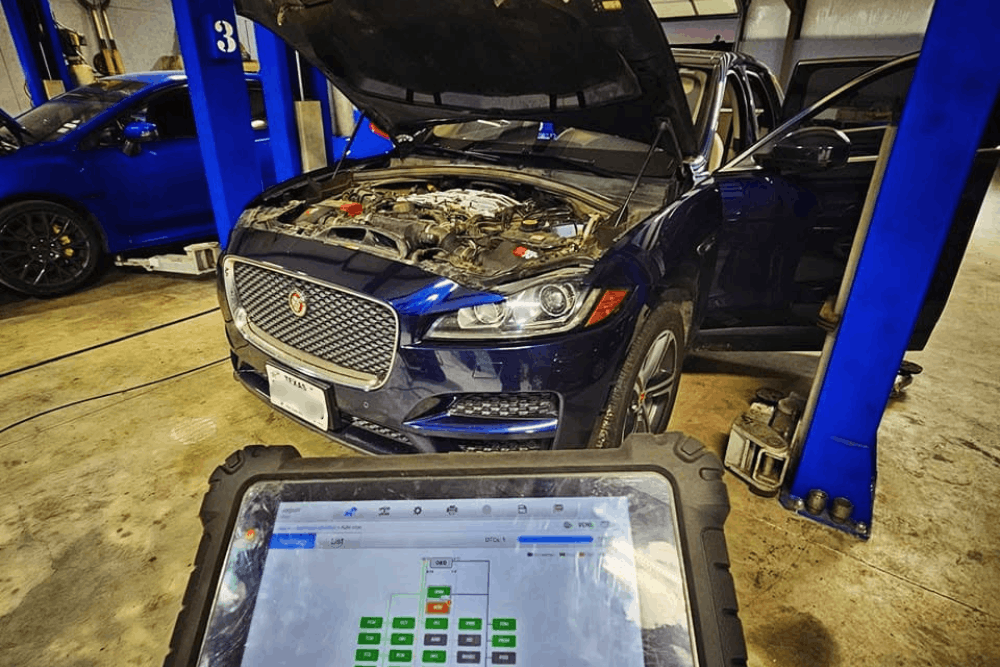
- Autel MS919 and Snap-On Triton: Network-level diagnostics across all vehicle communication systems, including High CAN, Low CAN, LIN Bus, and FlexRay. We see live data streams across multiple modules simultaneously, identify which are online, which are not responding, and trace faults to their source.
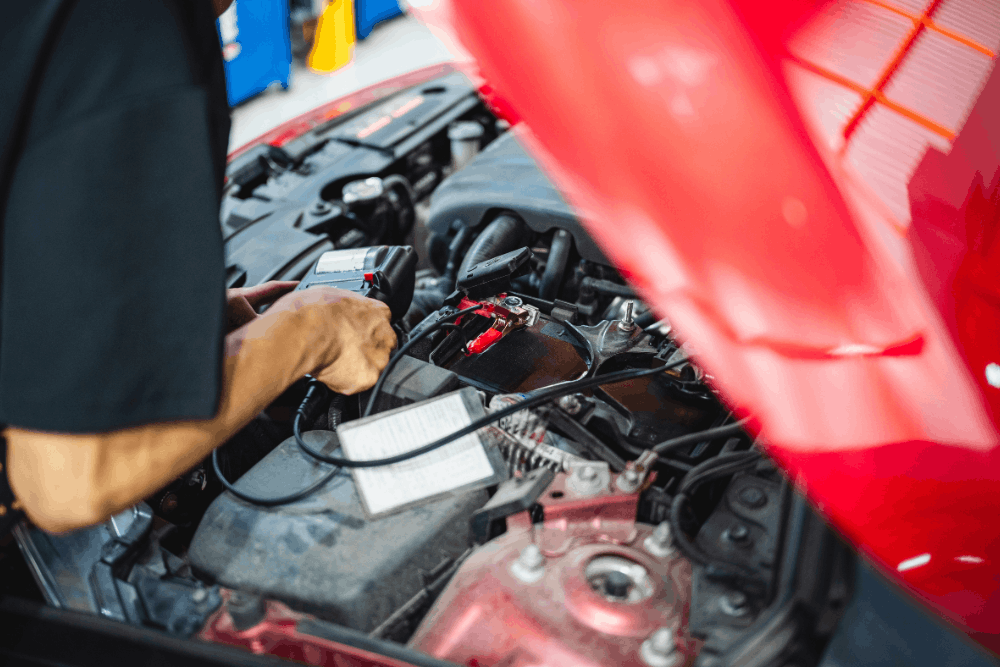
- Snap-On Electrical Diagnostic Equipment: Purpose-built for circuit-level work. We test individual circuits, check resistance, measure voltage drop, and isolate the exact point of failure.
This reflects our core commitment: precise diagnostics, honest results, and only recommending what your vehicle actually needs.
Module Programming in Haslet: Why a New Part Is Not Always Enough
Here is something many drivers do not realize: replacing a module does not automatically mean the vehicle will recognize it.
Modern control modules are programmed with vehicle-specific data, calibrated to your exact VIN, transmission configuration, and engine tune. A replacement module that is not programmed will not communicate correctly with the rest of the network.
Why Does My Car Need Module Programming After a Repair?
Replacement modules are not pre-configured for your specific vehicle. Without programming, the new module cannot communicate correctly with the CAN-bus or match your vehicle’s stored calibration data.
Think of it like activating a new phone. The hardware works out of the box, but it does not function on your network until it is registered and configured.
We use the Autel MS919 for OEM-level module programming, including ECM reprogramming, TCM updates, BCM replacements, and more.
What Happens If Module Programming Is Skipped?
| Feature | Programming Skipped | Programming Completed |
|---|---|---|
| Fault codes | Persistent new codes triggered | Clears to factory spec |
| Module communication | Non-communicating or partial | Fully integrated on CAN-bus |
| Vehicle start | May not start at all | Starts and operates normally |
| Network stability | Disrupts other modules | No downstream interference |
| VIN/calibration match | Module does not recognize vehicle | Matched to your exact VIN and tune |
We treat programming as a required step, not an optional one. Every module replacement at our shop includes the programming work needed to bring the system back to factory specification.
Key Fob Programming and the Immobilizer System
Key fob issues are often dismissed as minor inconveniences. Dead battery. Worn buttons. Easy fix. But in many cases, the real issue runs much deeper.
Most vehicles built after 2000 use an immobilizer system tied directly to the CAN-bus. The key fob communicates a unique transponder signal to the body control module or immobilizer control unit. If that signal is missing or unrecognized, the vehicle will not start, even with a perfectly cut mechanical key.
What Does Key Fob Programming Involve for Haslet Drivers?
Key fob programming involves syncing a new or replacement fob to your vehicle’s immobilizer system using factory-level scan tools. The process writes your vehicle’s identification data to the new key so it is recognized on startup.
Locksmiths can cut a key and program basic transponders. But when the immobilizer is involved or a BCM has been replaced, factory-level programming is the right call. We use the Autel MS919 for transponder programming, push-button start systems, and immobilizer resets across domestic, Asian, and European vehicles.
Ready to get your electrical issue diagnosed correctly the first time? Visit us at Brittni’s Automotive Repair, 5894 TX-114, Haslet, TX 76052, or call 817-350-7408. We offer after-hours drop-off and a shuttle service so your day keeps moving while we work.
Why Haslet Drivers Trust Brittni's Automotive Repair for Electrical Work
We are a female-owned, technician-led shop on Highway 114 in Haslet, voted #1 Auto Repair Shop by Fort Worth Weekly Magazine for both 2024 and 2025. Precision diagnostics, honest results, and quality workmanship are the standard we hold every repair to.
- 12-Month / 12,000-Mile Warranty: Every repair we complete is backed by a 12-month / 12,000-mile warranty, giving you confidence long after you leave our lot.
- Ford Master ASE Certified Expertise: Our technician holds a Ford Master ASE certification, backed by years of hands-on experience and a family tradition of automotive craftsmanship.
- Professional-Grade Scan Tools: We use the Autel MS919 and Snap-On Triton for network-level diagnostics and module programming, paired with Snap-On Electrical Diagnostic Equipment for circuit-level fault isolation.
- After-Hours Drop-Off: Leave your vehicle when it works for you; we will have it ready when you need it.
- Shuttle Service: We get you where you need to go while your vehicle is in our hands.
- Fort Worth Weekly’s #1 Pick (2024 and 2025): Recognized by the community as the top shop in our area two years running.
FAQs About Auto Electrical Repair in Haslet, TX
What causes a CAN-bus communication error?
A CAN-bus communication error occurs when one or more modules cannot send or receive data on the shared vehicle network. Common causes include damaged wiring, corroded connectors, a failing module, or a bad ground that creates voltage irregularities. A thorough circuit-level test is the only reliable way to isolate which part of the network is failing.
Why does my car need module programming after a repair?
Module programming is required after a repair because replacement modules are not pre-configured for your specific vehicle. Without programming, the new module will not recognize your VIN, match your vehicle’s calibration, or communicate correctly across the CAN-bus. Skipping this step can result in persistent fault codes, non-communicating systems, or a no-start condition.
Can a bad ground cause electrical ghosts in a vehicle?
Yes. A bad ground is one of the most common causes of unexplained electrical problems. Poor grounds create voltage irregularities that disrupt communication across the CAN-bus, which can trigger warning lights, false fault codes, and intermittent failures in seemingly unrelated systems. Identifying and correcting the ground fault is essential before replacing any modules or components.
Is key fob programming the same as locksmith key cutting?
No. Key fob programming and key cutting are different services. A locksmith cuts the physical blade of the key to match your ignition. Programming writes a unique transponder code to the key so your vehicle’s immobilizer system recognizes it. If the immobilizer system is involved, or if a BCM has been replaced, factory-level scan tool programming is required, not just a key cut.
Schedule Your Auto Electrical Diagnostics and Repair in Haslet, TX Today
Car electrical issues do not get simpler over time. If your warning lights are on, your key is not starting the vehicle, or your shop has told you a module needs to be replaced, Brittni’s Automotive Repair has the precision diagnostics and module programming capability to do the job right.
Visit us at 5894 TX-114, Haslet, TX 76052, or call us at 817-350-7408 to book your appointment today.